 Once again, it is time to paint the coming year with broad strokes. Since I have devoted myself to this craft for quite some time, I am of course aware of its difficulties. The consequence is that one sometimes becomes a little cautious with predictions, so as not to embarrass oneself too much. Or, alternatively, one exaggerates—because if a few predictions turn out to be correct, they tend to overshadow all the incorrect ones. But it is not easy: 2026 may turn out pale and uneventful, or equally well a year of major upheavals.
A number of events are already mapped out. There will be a Winter Olympics in Milan and a Football World Cup in the Americas. There will also be parliamentary elections in countries such as Brazil, Russia, Israel, Portugal, Thailand, and Sweden, as well as midterm elections to the House of Representatives and the Senate in the United States. In addition, there will be a crewed mission orbiting the Moon (Artemis II), Bulgaria will introduce the euro as its currency, and the United States will finally leave the World Health Organization (WHO). Let us move on.
The United States is consolidating the empire
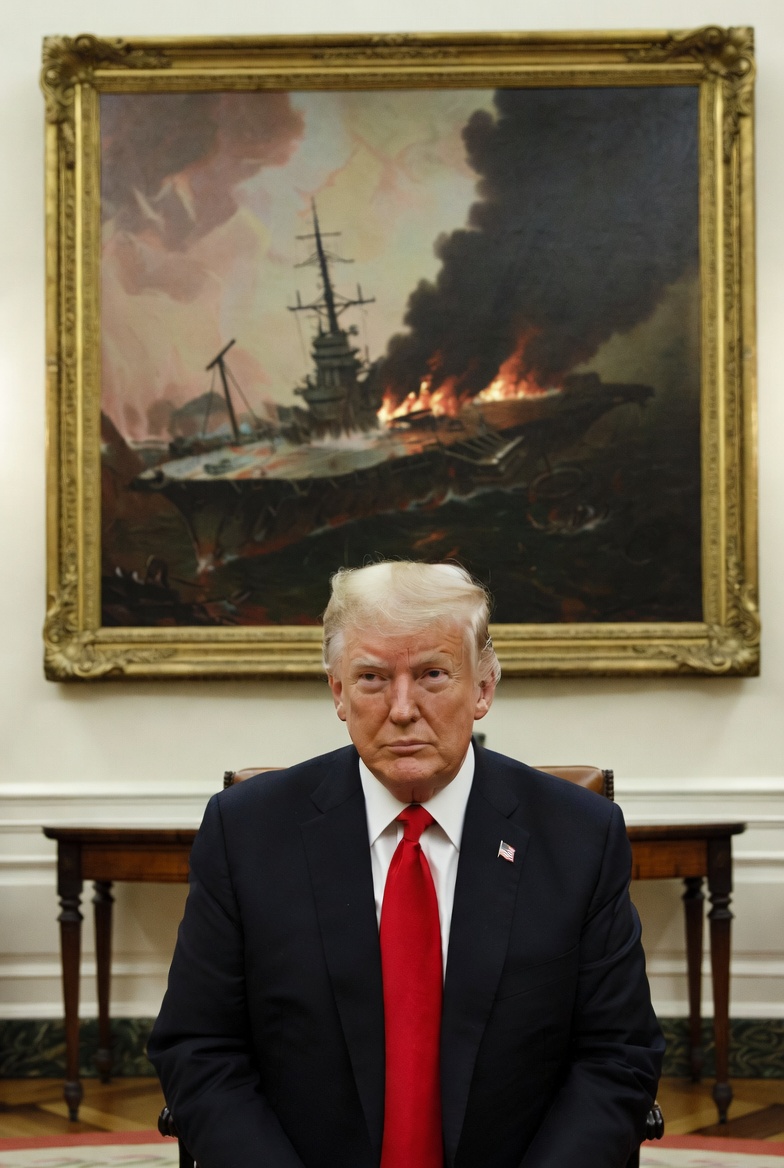
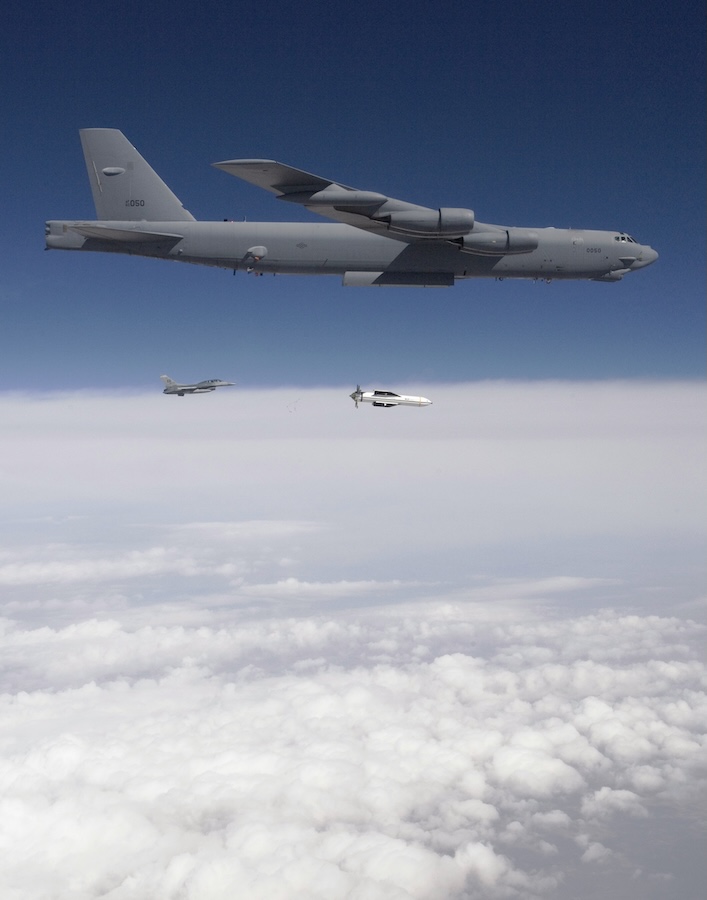
I was fairly certain that Trump would revise American foreign policy, turn inward, and put an end to adventures in, among other places, the Middle East and Southeast Asia. Here I was partly mistaken. While domestic policy has indeed been given greater priority, we are now seeing new military activity in Iran and Venezuela.
How these new conflicts will develop is difficult to predict; so far, they have not escalated, and the unrest surrounding Venezuela mostly concerns a trade blockade. What the Americans actually hope to achieve with this blockade is not entirely clear. It is not merely about stopping drug trafficking, as Venezuela is, to my knowledge, not a leading actor in that sector. Venezuela also possesses large oil reserves, which is always tempting—but oil can just as easily be purchased on the world market, rather than staging an enormously expensive naval spectacle.
Whether the tensions in Venezuela and Iran will escalate into full-scale wars remains uncertain. I do not believe they will. Thus, I return to my view that Trump is in fact a president more inclined toward domestic policy, with a few regrettable “incidents” when it comes to conflicts abroad. These incidents may possibly be interpreted as necessary concessions to various hawks and the military-industrial complex.
As for the American economy, it is more robust than the European one. Even though there are challenges on the other side of the Atlantic as well—particularly in Silicon Valley.
Many people are extremely tired of AI and the lofty expectations that have been promised. The bubble will probably burst next year, taking a number of companies and stocks with it. The prices of gold, silver, and platinum will likely continue to rise, as investors seek a safe haven.
We will probably see more planned nuclear power plants, as energy demand increases and renewable energy sources have proven to be something of a mirage. Climate alarmism is in decline, and other media trends are taking over, such as the Palestinian movement—and perhaps new pandemic-like phenomena?
Perhaps it is no longer as easy to create mass hysteria, since media channels are more independent than they were a few years ago? And since much content is now generated by AI, public trust is slowly diminishing.
South America becomes a vassal
If the great powers divide the world into spheres of influence, South America will likely be dominated by the United States. Minor conflicts and gunboat diplomacy may flare up, as in Venezuela, to underscore American dominance. Brazil is essentially the only country in the region that could harbor great-power ambitions. As a member of the BRICS cooperation, the country is partly skeptical of Washington. The future relationship between the United States and Brazil is something worth keeping an eye on.
The Ukraine war will end
As for the war in Ukraine, I believe we will see a resolution during the year—either through a direct Russian victory or a peace treaty. The parties sitting down and drafting a treaty would be infinitely more beneficial for Ukraine—even if many claim otherwise—since a continuation of the war could result in Ukraine losing even more territory and ultimately ceasing to exist as a country. The regional losses are significant but acceptable compared to a total Russian victory. The occupied areas are largely culturally Russian, and there is dissatisfaction among the population with the former Ukrainian administration. The situation closely resembles a civil war, with both sides sponsored by great powers with differing geopolitical interests.
New and old powers to rise in the Middle East
The war in Gaza has given Israel very bad press. Israelis are portrayed as ruthless mass murderers, and the conflict is framed as ethnic cleansing aimed at expanding the Jewish state. Whether this image is true or not, it is what is being broadcast across the global news flow. And the image of Israel as the Middle East’s only benevolent democracy has suffered a significant blow. Many Israeli citizens disapprove of the development, which could affect the parliamentary elections to be held in 2026.
I do not believe in a major war with Iran; it would be disastrous for Israel, as Iran now possesses a vast missile arsenal. Even with assistance from the United States, the devastation would not be mitigated. Israel is a small country, and all key strategic sites are located close to one another. They are not prepared for a war against a larger, militarily comparable neighbor.
The question is which path Israel will choose. Make peace with neighboring countries and exist as a more conventional state? Or continue as an expansionist state with grand ambitions? If support from the United States weakens—which aligns with Trump’s idea of prioritizing America first—Israel may be forced into peace with its neighbors, potentially leading to territorial losses. Turkey, Iran, Egypt, and possibly Saudi Arabia are the natural regional powers and will take on a greater role going forward.
Spheres of influence – and the bright light from the East
Trump appears to have temporarily lost interest in China and is instead trying to consolidate a sphere of influence around the United States, which likely extends to Greenland and beyond Central America. Perhaps the blockade of Venezuela can be explained in such terms?
China will continue to expand its sphere of influence and its trade interests. Together with Russia and the members of BRICS, it is creating a new global market and challenging the prevailing system. And this is the true root of the conflict with the West and The Anglosphere.
The conflict with Taiwan is not as significant as the media suggests, since they are, on paper, one country, and political reunification has always been within reach.
The small wars that flare up in Asia appear artificial—provoked by organizations and foreign think tanks with the aim of weakening the region and targeting China. But even such destabilizing activities may be shelved, depending on the future focus of the Western powers.
The rebirth of Europe begins
There has been debate about freezing Russian assets and seizing them, as well as granting Ukraine multi-billion loans. Naturally, several member states have opposed these ideas, as confiscation is illegal, and the loan represents an economic gamble that could bring down the entire union. These critical countries have been treated poorly, and the EU’s decision-making processes have been maliciously altered in order to push through the will of the current leadership.
The EU is built on numerous treaties signed by the member states, and when the Commission acts against these treaties, it indirectly dissolves the cooperation. It signals that rules no longer need to be followed—neither by Brussels nor by the member states—and at that point, there is effectively no EU left. The EU may continue for a few more years as a zombie-like collaboration before it collapses. Another possibility is that new forces take over and create a new union.
There is also a risk of a major economic crisis. The war in Ukraine and the excessive engagement have partly concealed the union’s poor economic performance. External threats are often a way for the ruling class to divert public attention from real problems. These cracks, however, tend to widen over time until reality catches up. A crash may make us all poorer, but it could also facilitate political change, and we may see new political leaders and alliances emerge.
Sweden is going to the polls
In 2026, there will be a parliamentary election in Sweden, and it may be the year in which we see a major political shift—but it will probably have negligible impact, since most political decisions are now made elsewhere. Sweden has recently joined NATO, the defense organization that has outlived its purpose, but the political implications should not be underestimated. And we will likely be the last country to leave the zombie bureaucrats in Brussels, before the cooperation is finally washed down the drain.