 “Your views are old-fashioned, or quite simply outdated” – yes, many of us have heard that argument. But the interesting thing is that it isn’t really an argument at all; it isn’t even a coherent, logical comment. To claim that someone’s views are considered outdated is a very strange remark, given that most views come and go.
Even the ancient Greeks had views on abortion, and the Romans discussed the nationalisation of land with a view to distributing it to poor citizens. The democratic form of government was already being debated 2,500 years ago. And the grounds on which citizenship should be based – and, of course, many other issues – have been discussed time and again throughout history and continue to be debated even today.
The ‘age’ argument is often trotted out when criticising progressive ideas. When people oppose modern architecture, abstract art, atonal jazz, cultural relativism and so on. Instead, they champion family life with traditional values, as well as diligence, punctuality, a strong work ethic and suchlike. They also oppose tattoos, nose rings, blue hair and unattractive clothing, and criticise transgender ideologies that advocate gender reassignment for minors. To take a contemporary example.
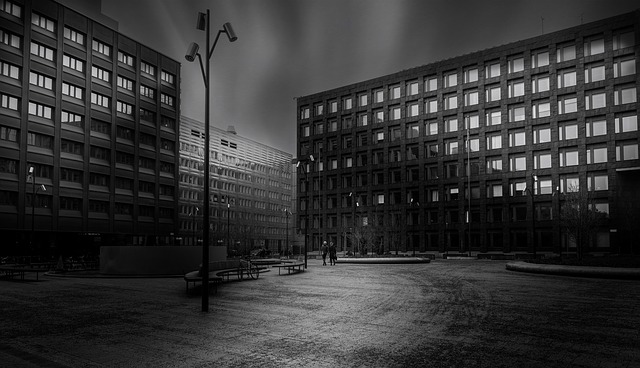
It is, of course, difficult to argue that grey concrete blocks are more beautiful and functional than traditional houses. Anything that is ugly must be theorised and underpinned by academic formulas, whilst beauty is trivialised, mocked and described as outdated.
The fact that a phenomenon is ‘new’ is a good thing and lends it legitimacy. If young people like the ideas, that’s even better. What young people do belongs to the future. The problem is that their fontanelles have barely closed and they barely know where their arse is. So, they’re a rather poor barometer of public sentiment. Especially today, when many of them have no real-life experience apart from what they’ve seen in films and computer games.
‘The new’ stems from industrialism and the ideology of progress that followed in its wake. Anything that was ‘new’ was good, and anything ‘old’ was bad. Old town centres, churches and monuments were torn down or bombed to pieces. People were forced to move to the suburbs. Then came the concrete mixers and asphalt boilers. Our cities were changed for all time.
It was good simply because it was new. Not because it was necessarily better, more practical or well thought out.
There weren’t really any good arguments back then either. Not even during the heyday of modernism. Why flat roofs in a rainy climate were supposed to be modern and functional was a mystery both then and now. And the kitchens became small and impractical. The food was also prefabricated: processed cheese, pre-packaged bread, margarine, and tinned sausages in brine. We were given large, attractive windows that let in the cold in winter and far too much heat in summer. Square houses, with small balconies and often no terraces, patios or covered verandas. On the walls we were supposed to have naïve art, and the gramophone played mass-produced pop songs.
Admittedly, the old cottages were small and cramped, whilst the new ones were larger, but cramped for the soul, sterile and impersonal. Gone were the joy of carpentry and the skill of craftsmanship; everything was planned and pre-ordered – you weren’t supposed to tinker with things or repair them yourself. And if you didn’t like this ‘progress’, you were a backward-looking, reactionary and stuffy person. You were out of fashion.