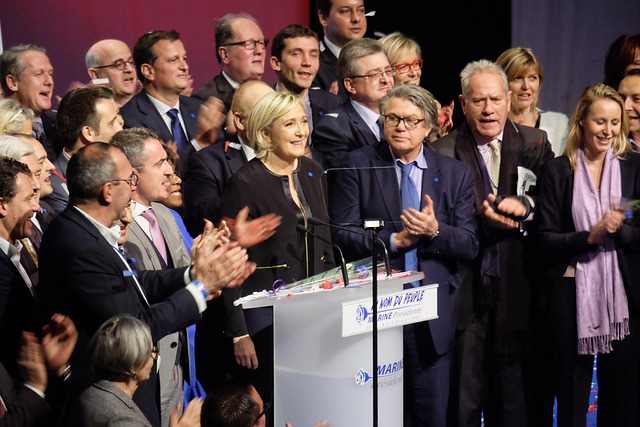
Many liberals and socialists ask themselves why radical right-wing winds are blowing across the world, from Trump, Farage, Le Pen, Milei, and Bukele to Orbán, Fico, Meloni, and Weidel.
These are leaders who put the nation and its citizens first, who are critical of migration, taxation, and bureaucracy. There may be undertones of Christianity, tradition, and conservatism to varying degrees. At the same time, right-wing extremists display many individual differences and are additionally described as populists.
The left often concludes that selfishness and suspicion are behind the movement – that many of us simply have no sympathy for other races, cultures and religions, that people are egocentric and want to live in a conservative bubble.
After all, we cannot blame the social climate or the economy, since we are living in the best of all possible worlds; we can easily buy better wine than medieval kings ever drank, and we have central heating, cars, and all manner of electronic toys.
Why did right-wing extremism not emerge after the end of the war, when Europe lay in ruins? People were poor, dirty, and miserable; surely they should have had greater reason—at least according to the logic of the left.
The problem with attributing the movement to selfishness is that it does not withstand even superficial scrutiny. The right-wing extremist movement promotes the family and the people and does not, in fact, place the individual first. In many respects, it is a collectivist ideology. What it does reject, however, are certain cultures and expressions. It draws boundaries for what is considered good and bad, right and wrong, and promotes safety in streets and public spaces, as well as protection for women.
On closer reflection, right-wing extremism is not particularly extreme at all. Its message is fairly self-evident. One wishes to promote one’s own distinct identity and culture, and to develop one’s own country, rather than paying for foreign people and their cultural expressions. They are welcome to cultivate their culture—but not in our countries, rather in their own homelands.
The left often calls this racism, but it is far removed from the skull measurements and dismissal of other races’ civilisations of earlier times. Today’s right is not particularly concerned with how other peoples live or which gods they worship, as long as they remain on their own soil. People are not divided into hierarchies and races; everyone may live as they choose, but not at the expense of others. Everyone has a right to privacy and to the opportunity to develop their own distinctiveness.
This outlook is often associated with the so-called alternative right. While traditional conservatives are keen to rank peoples and cultures, the new right does not do so in the same way. There is no intrinsic value in constructing cultural development hierarchies; the focus is instead on one’s own people, one’s own values, and one’s own history.
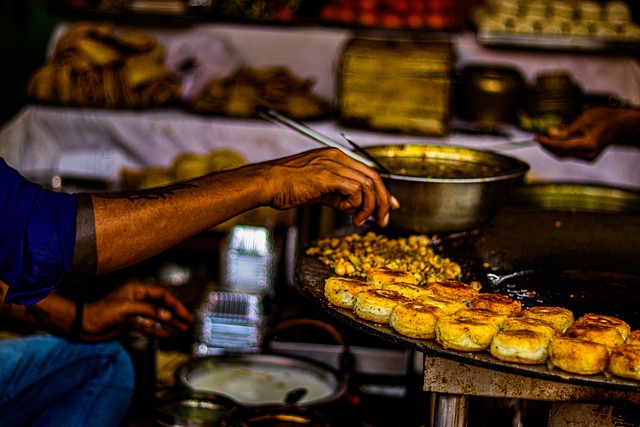
A major reason for the rise of the modern right is, of course, mass migration and the profound changes it has brought, in the form of increased crime, insecurity, and fear. The left rarely acknowledges these factors, since the multicultural society is their creation and they have worked hard to bring it about. They often conceal rising crime rates with platitudes such as “increased reporting rates” and manipulation of statistics. They see our disintegrating societies as something positive, worship the stale smell of curry, admire graffiti, and consider broken urban areas to be “vibrant”.
We are now approaching a point where one must ask who is truly extreme. Is it more a question of left-wing extremism than right-wing extremism?
Deliberately and willingly dismantling our well-ordered societies and transforming them into something resembling the social order of the Third World—can that really be healthy? Is it not rather an expression of malice?
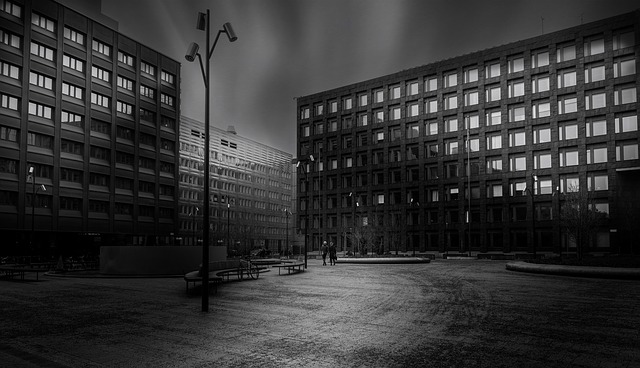
From a broader perspective, we are witnessing the failure of modernism itself. We believed in urban planning, the atomised individual, atheism, clean straight lines, concrete, glass, and steel. Gone are the ornaments and craftsmanship; what we see instead are prefabricated elements combined in various ways, often manifesting as dull grey boxes scattered across our cities, frequently showered with architectural awards and honours. The degradation of art and culture appears to be a central feature of late modernity.
We see this in films by, for example, Lars von Trier, where disgust and calculated humiliation are central themes, or Poor Things by Yorgos Lanthimos. Such works are praised to the skies alongside the creations of artists such as Marina Abramović, where we also observe a leaning towards the occult—something that has contributed to rumours that the social elite engage in demonic activities. Films such as Eyes Wide Shut by Stanley Kubrick are thought to expose such practices, but are more likely expressions of the same phenomenon.
Contemporary cultural expressions inundate us with violence, over-sexualisation, hedonism, romanticised drug use, decay, and crude stupidity. At the same time, the guardians of this order meticulously police words and syllables when faced with even the slightest criticism, and do not hesitate to punish dissent through social ostracism and career destruction.
The modern right naturally reacts against all of this. It wants normal culture, normal immigration, and normal societies—not avant-garde experiments, activism, and radical change. It sees no intrinsic value in endlessly reassessing our existence and discarding all old order in order to create something new, the nature of which remains unclear.
This is a brief explanation for the rapid rise of the right. Whether we should additionally label it “extreme” depends on personal preferences and which side one has chosen in the so-called culture war.
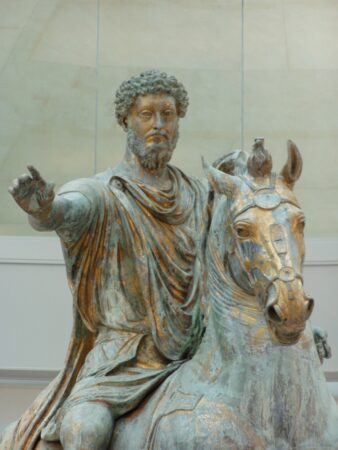
Photo from Wikimedia.org