The concept of a Third Roman Empire lives on among various peoples in Europe and beyond. Since Rome was Europe’s first superpower and spread the culture and wisdom of antiquity, there are strong reasons to associate with this empire.
The first empire was concentrated around Rome and its conquests around the Mediterranean until 330 AD. According to myth, Rome was founded in 753 BC and the first king was Romulus, who, according to legend, was raised by wolves. The state was long governed as a republic, until 27 BC when the actual Roman Empire was born with imperial rule. The second empire originated in Constantinople, where the capital was moved, and when this empire fell in 1453, its legacy was not entirely clear. Where is the third Rome, and does it even exist?
Eastern Rome
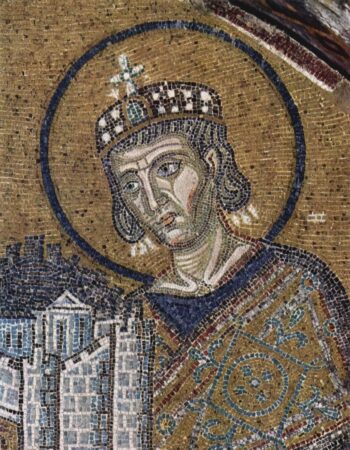
There is no doubt that the capital was moved to Constantinople in 330 and that the empire was Christianised. The empire continued to exist as a Greek-speaking cultural sphere around Anatolia, and the inhabitants called themselves Romans and not Byzantines, which is a later designation.
Ottoman Empire
The Ottomans, a people of Turkish origin, conquered Constantinople, thereby breaking with the long tradition. They formed their own empire with their own traditions and laws and converted to Islam. Since they conquered and broke with Roman continuity, the Ottomans’ legacy as the third Rome can be questioned.
The Holy Roman Empire of the German Nation
The Roman army consisted largely of Germanic peoples during the latter part of the first Rome’s existence. When the capital was later moved to Constantinople, Rome continued to function as an important city, and there were bishops and other state functions that were partly taken over by the Germanic peoples.
However, there is a break in continuity from 410 AD, when Rome was first conquered by the Germanic tribes, to 962 AD, when Charlemagne proclaimed the Holy Roman Empire. In addition, it should be noted that Rome was no longer the capital of the empire at the time of the Germanic conquest.
However, the German-Roman Empire has a greater right to call itself the Third Rome than the Ottomans, as religion and local traditions were preserved, and the Germanic peoples were already incorporated and part of the empire. The Germanic cultural sphere and its connection to Rome has been important for the whole of Europe and a strong force for both continuity and development.
In order to promote Western European ties to Rome, the history of the Eastern Roman Empire has often been downplayed and is rarely taught in our schools. We stopped calling them Romans and instead started calling them Byzantines, after the Greek colony of Byzantium on which Constantinople was built. A bit far-fetched, but the wordplay had the intended effect. Western Europe is often proclaimed the heir to Rome, but is that really true?
Russia
The Slavic peoples were Christianised by the Eastern Romans beginning in the 9th century, and their alphabet was created by the Greek monks Cyril and Methodius, who based the script on the Greek alphabet. The Slavs were thus incorporated into the Roman sphere. The Orthodox Church remained an important part of their culture until modern times, bringing with it the Eastern Roman heritage. The strongest Slavic state, based in Moscow, naturally wanted to portray itself as the third Rome after the fall of Constantinople, and its heir is Russia. The ties to the Eastern Roman Empire are very concrete.
There is, however, a problem here. The Communist Revolution brought about a break in continuity, and today the country has no emperor, or tsar as the title is called in Russian. Therefore, we have no complete connection to Constantinople and Rome. On the other hand, the Orthodox Church and culture are intact, and a person from, for example, the Romanov dynasty or another noble family could be crowned tsar by the patriarch, and continuity would thus be technically restored. And the Third Roman Empire would be reborn.